



What hospitals need from a hot water system
- Continuous supply with no downtime, so systems use several heat pumps plus standby heating.
- Stored water temperatures suitable for hygiene and infection control, with thermostatic mixing at outlets to prevent scalding.
- Low running costs for a 24-hour, 365-day load.
- No combustion or fuel storage near patient areas.
Hot water temperature and hygiene
Hospital hot water systems are designed to limit bacterial growth such as Legionella. A common approach is to store hot water at 60°C or above, keep circulating hot water at 50°C or above throughout the building, and fit thermostatic mixing valves at basins and showers so patients receive safe, comfortable water. Pecol designs heat pump and calorifier systems to meet the temperatures set by the hospital's engineers and applicable guidelines, using high-temperature models or a booster stage where needed.
Hospital references
Pecol's hospital projects include Cheras Rehabilitation Hospital (KL), Permai Psychiatric Hospital (Tampoi, Johor), Kluang Hospital (Johor), Desa Park Hospital (KL), Shah Alam Hospital, Kuching Medical Center and Hospital Raja Perempuan Zainab II (Kota Bharu), all with heat pumps, as well as Kuantan Medical Centre, KPJ Hospital Shah Alam and other medical centres. Overseas references include Singapore General Hospital and Yishun Community Hospital.
System design for hospitals
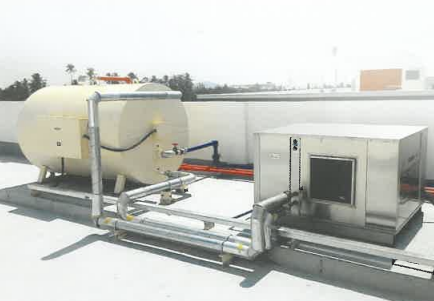
A typical design uses two or more PHM heat pumps sized so that one can be serviced while the others meet demand, one or more calorifiers sized for the peak hour, a circulation loop to keep hot water close to every outlet, and backup electric heating. Pecol engineers work with the hospital's facility team and consultants on the specification.
Retrofitting older hospitals
Older hospitals often have electric calorifiers or oil-fired boilers. Converting to heat pumps can cut water heating energy by up to three quarters. The project can be phased block by block so hot water supply continues throughout.